
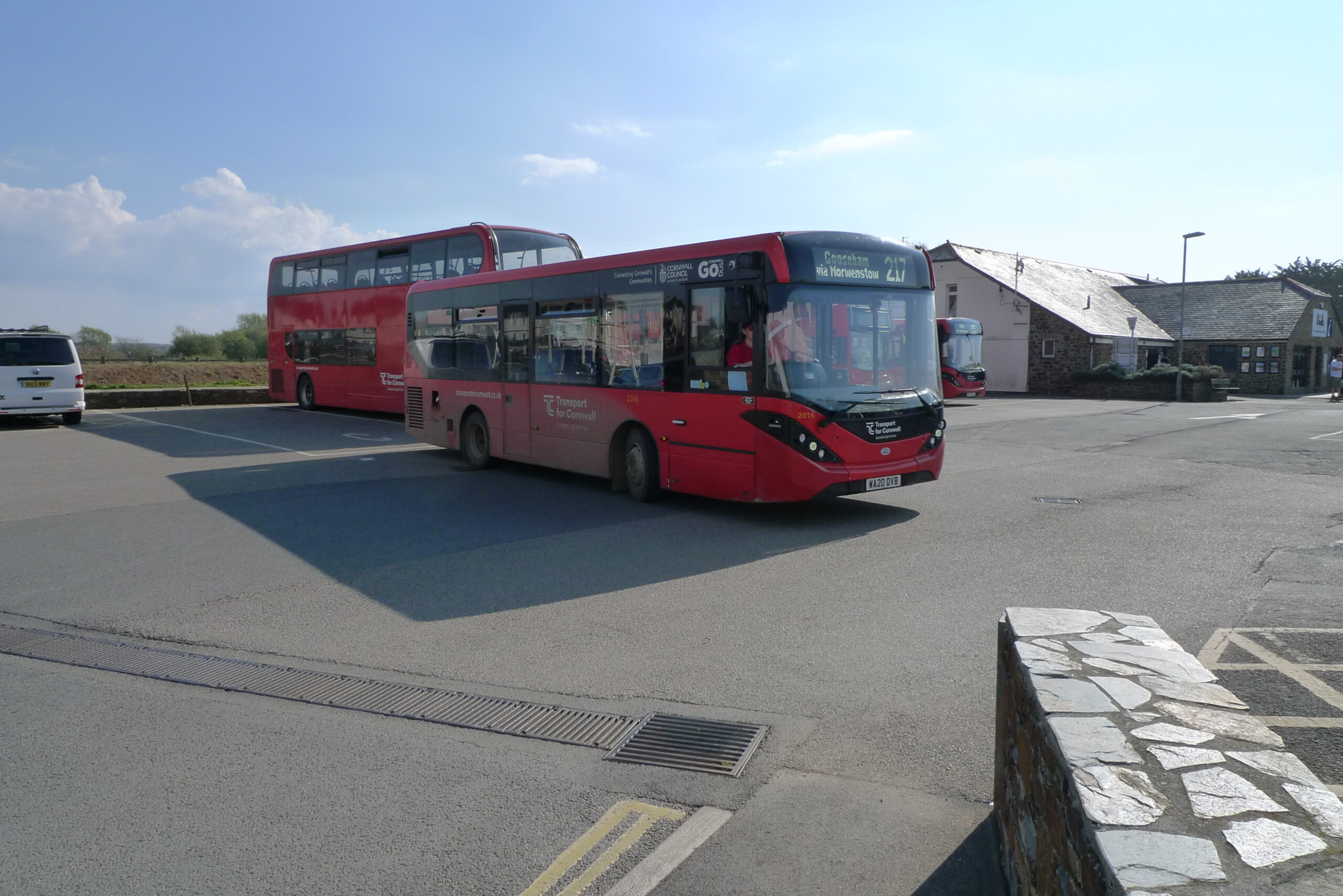
First Bus has confirmed it will withdraw its commercial bus operations from Cornwall, with services ending on 14 February 2026. The decision has been taken by First Bus and relates to services it operates on a commercial basis rather than under Cornwall Council contract.
Cornwall Council has issued guidance explaining what will happen next. While the immediate impact is focused on mid and west Cornwall, this is an important moment to reflect on the wider role public transport plays across the county — including here in Bude.
Where is affected?
First Bus predominantly operates in St Austell, Truro, Falmouth, Helston, St Ives, Penzance, Camborne, Pool and Redruth. A number of routes — including the M6, T1, T2, U1, U2, U4 and several town services — will cease under First’s operation.
For Bude residents, it’s important to be clear: our core local services are not directly affected. First Bus does not operate the main routes serving North Cornwall. Day-to-day travel within Bude and its immediate surroundings therefore remains unchanged.
However, many residents travel further afield — to Truro for hospital appointments, to Falmouth or Camborne for work, or to connect with rail services. For those journeys, there may be timetable changes, new operators, or altered frequencies from 15 February 2026.
What happens next?
From 15 February, a revised network will operate under the umbrella of Transport for Cornwall. Go Cornwall Bus will introduce new commercial services to fill gaps left by First Bus. These routes are not designed to mirror the outgoing network exactly; Cornwall Council has made clear that the previous commercial model was considered financially unsustainable.
Importantly, ticket interoperability continues. Existing valid First Bus tickets can still be used until expiry, concessionary passes remain accepted, and passengers will be able to purchase tickets via the Transport for Cornwall website and app going forward.
There may be some initial disruption during the handover weekend, and passengers travelling in mid or west Cornwall are advised to check updated timetables in advance.
Why This Matters — Even in Bude
Although this is primarily a south and west Cornwall issue, it highlights a much bigger challenge: the fragility of rural public transport.
Cornwall’s geography makes transport fundamentally different from that of cities. Lower population density means fewer passengers per mile, longer routes, and tighter commercial margins. When services are run commercially, viability depends heavily on fare income. If that balance tips, routes can disappear quickly.
In rural areas, reduced services don’t just mean inconvenience. They can reshape daily life.
For residents without access to a car — including many young people, older residents and lower-income households — buses are often the only realistic way to access employment. A small reduction in frequency can make shift patterns unworkable. A missed connection can mean losing half a day’s wages.
Healthcare access is another major factor. Cornwall’s acute hospital services are centralised, particularly in Truro. For North Cornwall residents, that journey is already long. Reliable connections further south in the county matter because they form part of the wider network that people depend upon.
Education is equally sensitive to timetable changes. College students, apprentices and sixth formers rely on predictable services. Small adjustments in timing can create disproportionate stress for families.
And beyond individuals, transport shapes economic opportunity. Businesses recruit from the labour market they can realistically reach. Investors assess how easily clients and staff can travel. Visitors move around the county via its transport infrastructure. When networks shrink or become unreliable, economic geography shrinks with them.
The North Cornwall Context
Bude already experiences limited strategic connectivity. We do not have a rail link. Long-distance travel relies heavily on bus connections and road infrastructure. That means resilience elsewhere in Cornwall indirectly matters to us. A strong, coherent county-wide network supports onward travel, business relationships and regional integration. A fragmented network makes Cornwall feel smaller — and more isolated.
What We Can Do
Connect Bude exists to improve public transport connectivity. We consistently highlight how transport links affect:
- Access to work and skills
- Health outcomes
- Business growth
- Investment potential
- Young people’s life chances
We engage constructively with Cornwall Council, regional stakeholders and local businesses to ensure North Cornwall’s voice is heard in infrastructure discussions. Transport is not a standalone topic; it is foundational to economic inclusion and regional fairness. Moments like this reinforce why that advocacy matters.
Final Thoughts
For clarity: Bude’s core services are not being withdrawn. This change primarily affects mid and west Cornwall.
But the wider message is significant. Rural public transport requires long-term thinking, coordination and resilience. Commercial viability alone does not always align with community need. Reliable buses are not a luxury. They are infrastructure — just as essential as roads, broadband or utilities. Connect Bude will continue to monitor developments and advocate for strong, reliable connectivity for North Cornwall residents.