
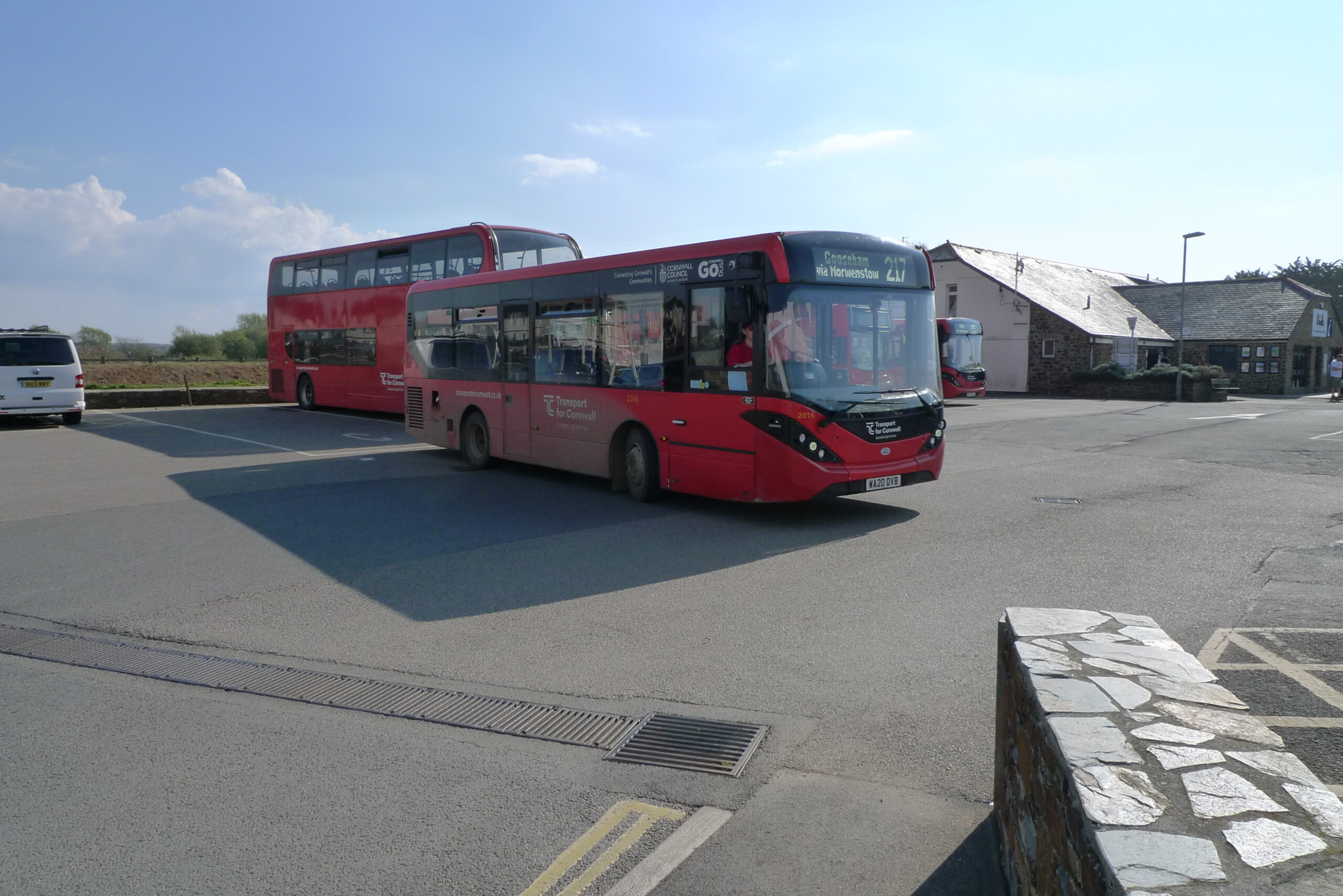
Cornwall has been allocated up to £500,000 to take part in a national pilot exploring how bus franchising could work in rural and geographically spread-out communities.
Following similar pilots announced in Yorkshire and Cheshire, the Department for Transport has confirmed that Cornwall will now be included — recognising that what works for cities does not always work for places like North Cornwall.
This pilot represents a significant shift in how bus services could be planned and protected in future.
What Is Bus Franchising?
Under a franchising model, the local authority plays a much stronger role in:
- Deciding where buses run
- Setting timetables and service standards
- Protecting routes that are socially necessary, even if they are not highly profitable
Rather than operators deciding routes independently, services are planned as a joined-up network, designed around the needs of residents.
For rural areas like Bude, this could be particularly important.
Why This Matters for Rural Communities
Bus services in rural Cornwall are often vulnerable to sudden changes, cancellations, or service reductions. Routes that are essential for accessing work, education, healthcare or shops can disappear simply because they are no longer commercially viable.
The upcoming Bus Services Bill aims to address this by:
- Ending the practice of bus routes being scrapped at short notice
- Tightening the rules around cancelling or changing vital services
- Providing greater protection for routes used by vulnerable or disadvantaged passengers
Local examples such as the 6A route show how disruptive the loss or reduction of a service can be for communities that have few alternatives.
As part of the new legislation, councils will be required to:
- Identify socially necessary local bus services
- Work with operators to put stricter requirements in place before these services can be altered or withdrawn
This is a critical change for rural Cornwall, where a single route can make the difference between independence and isolation for some residents.
Cornwall’s Opportunity to Do Things Differently
Cllr Dan Rogerson, Cornwall Council’s Liberal Democrat Cabinet Member for Transport, welcomed Cornwall’s inclusion in the pilot, saying:
““We know how important bus services are in connecting communities across the county and how much our residents rely on them. Our inclusion in the pilot study reflects our work to date in bringing together Cornwall’s bus operators and the collective vision we have to improve bus services for residents.
Delivering a bus network in rural areas has it challenges, particularly in the current financial climate. What works in cities doesn’t necessarily work in rural areas. This will give us the chance to come up with new ways of providing bus services and options that meet the needs of our passengers.”
This pilot will help identify the most effective ways of managing bus services in a rural context and provide evidence that could shape long-term transport policy — not just for Cornwall, but nationally.
What Happens Next?
The pilot will explore how franchising could:
- Improve reliability and stability of services
- Better reflect rural travel patterns
- Support communities that rely heavily on buses but are often overlooked
For places like Bude, this is an opportunity to ensure that future transport planning recognises the realities of rural life — longer distances, limited alternatives, and the importance of dependable connections.
Connect Bude will continue to follow developments closely and share updates as this pilot progresses.
Good public transport is not a luxury in rural areas — it is essential infrastructure. Read more here – https://www.facebook.com/groups/702185152220921/permalink/810100134762755/