

Connect Bude has today released the findings of its recent Bude-Okehampton Bus Survey which was posted to households throughout Bude and Stratton. The responses present clear evidence that unreliable transport connections are limiting access to education, employment and healthcare across North Cornwall.
The survey, delivered randomly to more than 500 households in Bude and completed by 188 residents, was undertaken in partnership with Railfuture. The results show strong, consistent themes rather than isolated complaints.
Currently, just under 25% of respondents reported ever travelling by bus to Okehampton and beyond, while just over 90% use cars. Crucially, the data suggests this is not a matter of preference but of confidence and trust. Residents repeatedly described the current system as unreliable and stressful, particularly when attempting to connect with trains at Okehampton and Exeter.
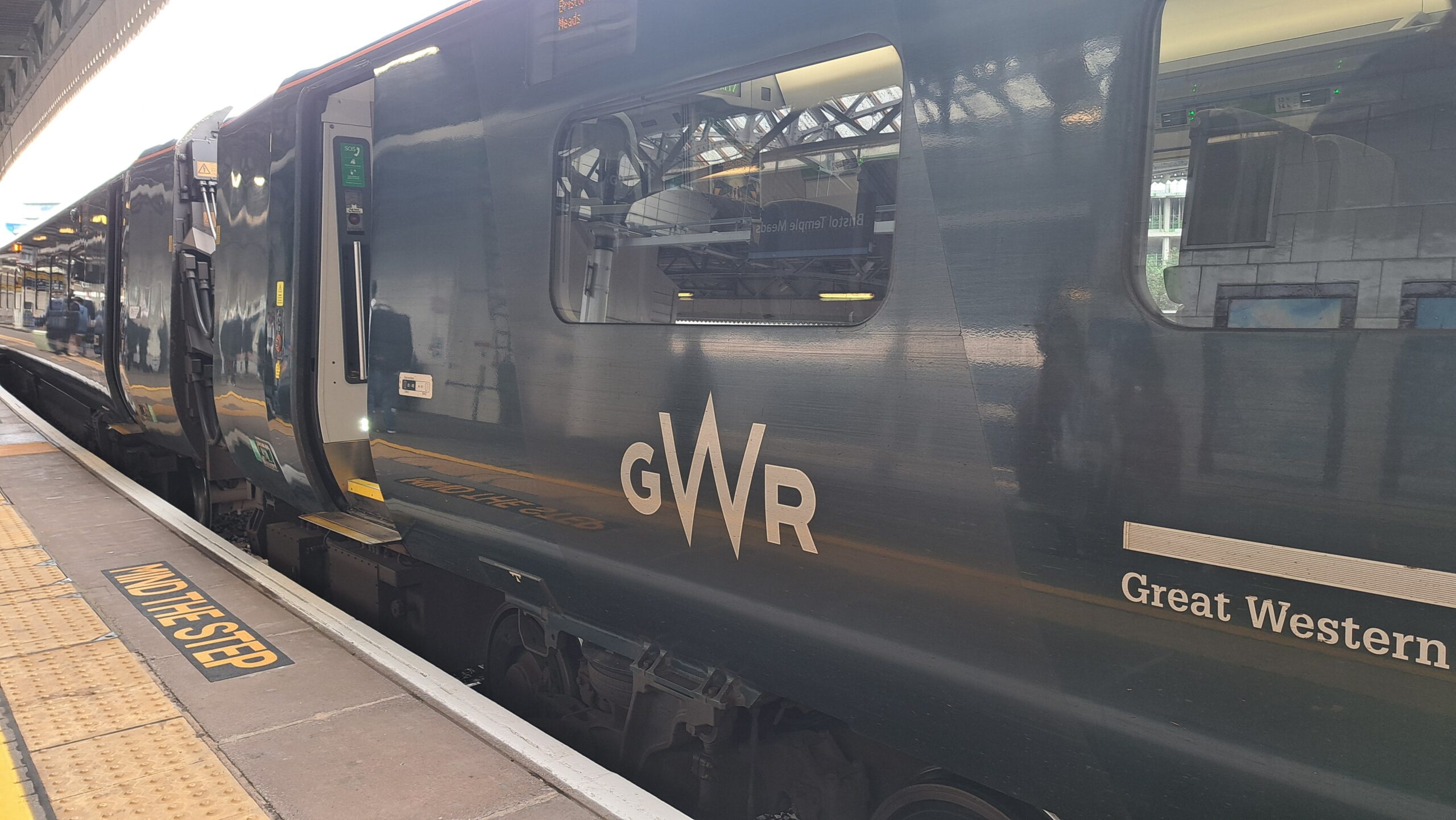
Despite the reopening of the Dartmoor Line to Okehampton, bus arrival times frequently fail to align with train departures. A missed connection can mean a wait of up to an hour – or significantly longer on Sundays – often resulting in abandoned journeys and a permanent return to car use. The survey identifies reliability as the single biggest factor influencing travel behaviour: if connections are not guaranteed, residents will default to driving, if they have access to a private vehicle.
The findings also demonstrate that transport is not simply a logistical issue, but an economic and social one. Respondents linked poor connectivity directly to missed college start times, restricted access to evening classes, lost job opportunities and reduced client work. Healthcare access was another significant concern, particularly for older residents and disabled passengers navigating complex interchanges without sufficient facilities.Other research shows that students’ travel length affects both grades and mental health.
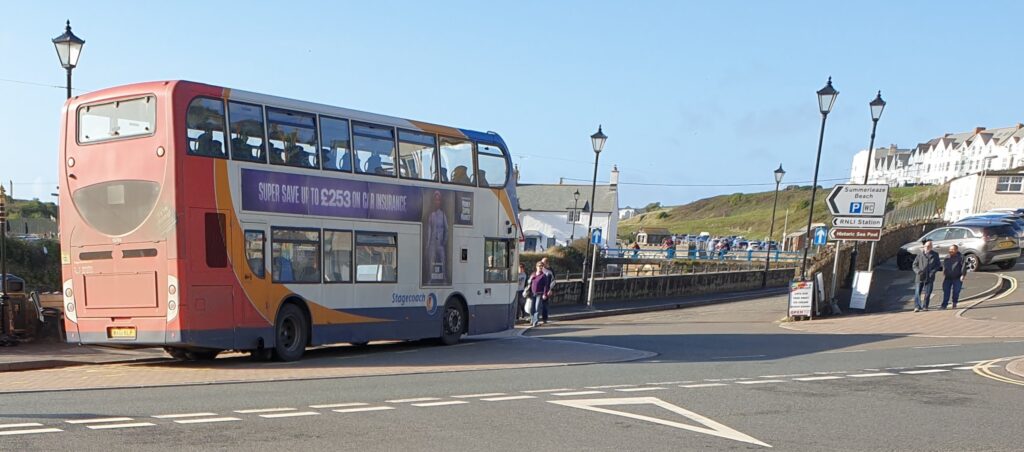
Bude remains England’s largest community without direct railway access and continues to experience some of the weakest bus links to the national rail network. Residents were clear that reliable connectivity to Exeter is essential for economic growth, skills development and retaining young people locally.
The survey shows strong public support for a guaranteed bus–rail connection at Okehampton of hourly services that meet every train, integrated ticketing covering both bus and rail, and extended early morning and evening services aligned with education and work patterns. Respondents indicated that short, dependable transfer times are critical to building trust in the network. Affordability was also highlighted as a determining factor in encouraging greener travel choices with through-ticking being one of our higher rated needs.
Alongside publication of the report, Connect Bude has formally begun working in partnership with Connect Launceston under a new joint banner: Connect North Cornwall. This collaboration will pursue the long-term objective of restoring rail to North Cornwall and at the same time improving connectivity along the main line between Penzance and Exeter. The partnership also brings renewed focus to Connect Bude to strengthening and protecting bus services as a priority, recognising that rail and bus integration must function as a single system.
Richard Wolfenden-Brown, Chair of Connect Bude said:
“This is not just about convenience. It is about education access, workforce development, health equality and economic resilience. The community has spoken clearly: without reliable, guaranteed connections, people will not leave their cars behind. Transport policy is crucial in directly shaping our life chances.”
Connect Bude is now calling on councillors and MPs across Cornwall and Devon to treat North Cornwall connectivity as a strategic priority and to support coordinated cross-border planning to deliver integrated, reliable services.
The full survey findings are below